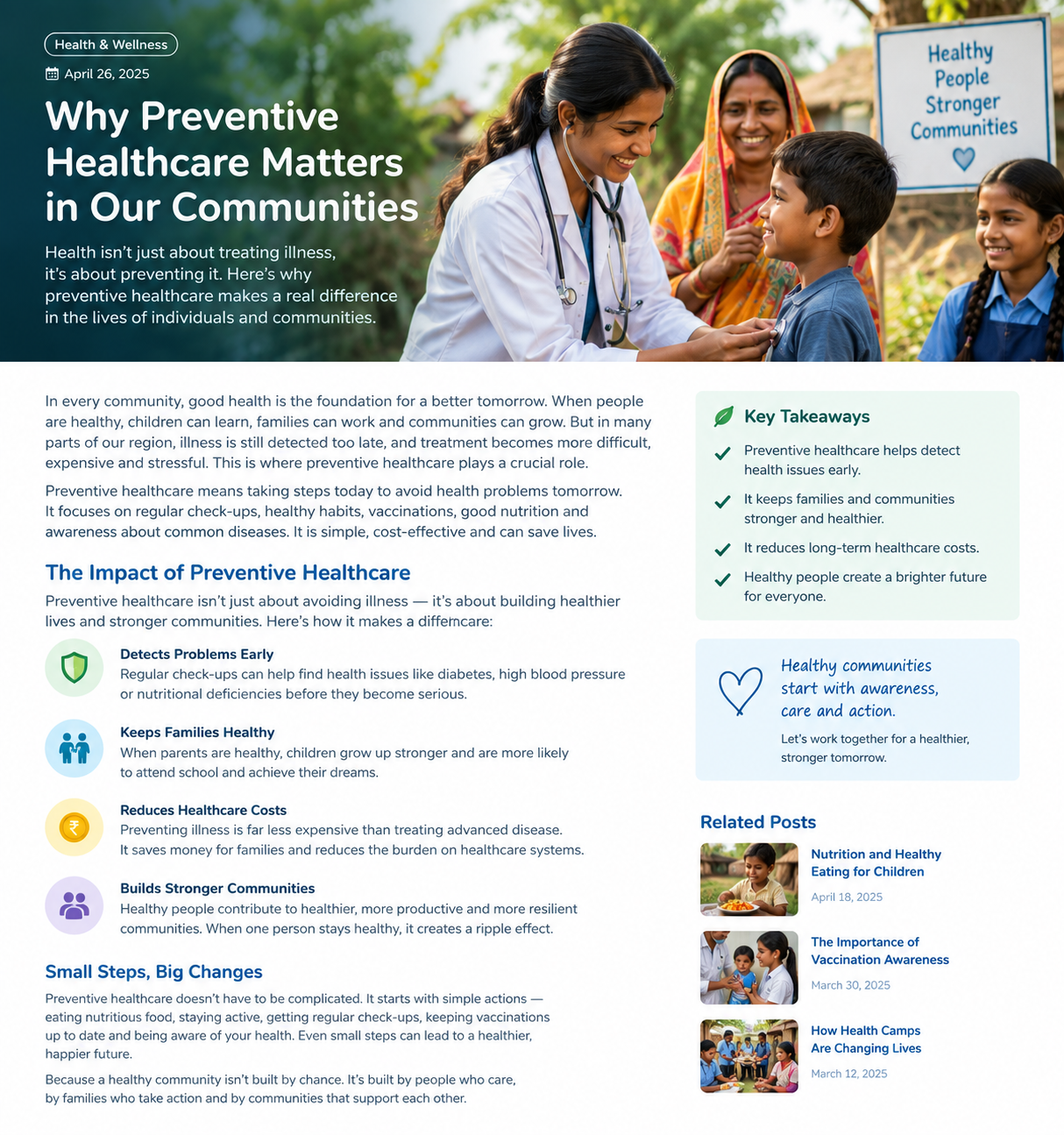
Why Preventive Healthcare Matters in Our Communities
Good health is not only about treating illness when it happens. It is also about taking simple steps today to prevent health problems tomorrow.
In many communities, people visit a doctor only when they feel seriously unwell. While treatment is essential, prevention can often help identify health risks much earlier and reduce the chances of serious complications. Preventive healthcare gives individuals, families, and communities the knowledge and tools they need to stay healthier for longer.
What Is Preventive Healthcare?
Preventive healthcare refers to the steps we take to protect our health before a disease or serious health problem develops.
It can include:
- Regular health check-ups
- Blood pressure and blood sugar screening
- Vaccinations
- Dental and eye check-ups
- Healthy eating and physical activity
- Maintaining good hygiene
- Mental health awareness
- Health education
- Early screening for certain diseases
- Avoiding tobacco, excessive alcohol, and other harmful habits
These actions may seem simple, but together they can make a meaningful difference in the health of individuals and entire communities.
Why Prevention Is Better Than Waiting for Illness
Many health conditions can develop quietly without obvious symptoms. High blood pressure, diabetes, high cholesterol, and some other conditions may not cause noticeable problems in their early stages.
Regular screening can help identify potential concerns earlier. When a health issue is detected early, people may have more opportunities to make lifestyle changes, receive appropriate medical care, and prevent the condition from becoming more serious.
Prevention is therefore not about being afraid of illness. It is about being informed and taking action at the right time.
Protecting Children Through Prevention
Children deserve a healthy start in life. Preventive healthcare plays an important role in supporting their physical and emotional development.
Regular medical check-ups, vaccinations, proper nutrition, dental care, hygiene education, and vision screening can help identify health concerns that may otherwise go unnoticed.
Schools and community organizations can also play an important role by teaching children healthy habits from an early age.
When children learn the importance of nutritious food, cleanliness, exercise, sleep, and emotional wellbeing, these lessons can become lifelong habits.
The Importance of Health Education
Healthcare is not only about hospitals and doctors. Knowledge is also an important part of staying healthy.
People who understand common health risks are often better prepared to make informed decisions about their wellbeing.
Community health education can cover topics such as:
- Nutrition and balanced diets
- Personal and environmental hygiene
- Maternal and child health
- Vaccination awareness
- Diabetes and blood pressure
- Mental wellbeing
- Healthy lifestyles
- Substance abuse prevention
- Importance of regular medical check-ups
Simple, clear health information can reach people who may otherwise have limited access to healthcare resources.
Preventive Healthcare Can Help Families
Illness can affect an entire family—not only emotionally but also financially.
When a serious health condition requires prolonged treatment, families may face medical expenses, time away from work, and additional responsibilities.
Preventive care cannot eliminate every health problem, but early detection and healthier lifestyles can help reduce some avoidable risks.
For families with limited resources, community-based health camps, awareness programs, screenings, and educational initiatives can provide valuable support.
Building Healthier Communities
A healthy community is created when people look after not only themselves but also one another.
Community organizations, schools, healthcare professionals, volunteers, local institutions, and families can work together to promote preventive healthcare.
Health camps can provide basic screenings and awareness. Educational programs can help people understand common health risks. Schools can encourage healthy habits among children. Community volunteers can help share reliable health information with people who may have limited access to healthcare services.
These efforts can create a culture where people think about health before a serious problem occurs.
Prevention and Mental Wellbeing
Preventive healthcare should also include mental and emotional wellbeing.
Stress, loneliness, anxiety, and other mental health challenges can affect people of all ages. Creating communities where people feel comfortable talking about their wellbeing is an important part of prevention.
Schools, workplaces, families, and community organizations can help by encouraging open conversations, reducing stigma, and directing people toward appropriate professional support when needed.
Taking care of mental wellbeing should be viewed as a normal part of taking care of overall health.
Small Habits Can Make a Difference
Preventive healthcare does not always require major changes.
Simple daily habits can contribute to better health:
Eat well. Choose a balanced diet with a variety of nutritious foods.
Stay active. Regular physical activity can support overall physical and mental wellbeing.
Get enough sleep. Good-quality sleep is an important part of maintaining health.
Stay hydrated. Drinking enough water supports normal body functions.
Maintain hygiene. Handwashing and good personal hygiene can help reduce the spread of infections.
Avoid harmful habits. Avoiding tobacco and limiting other health-risk behaviors can reduce preventable health risks.
Get appropriate check-ups. Regular medical care and recommended screenings can help identify certain problems earlier.
The right habits will vary from person to person, but the principle remains the same: taking care of health should be an ongoing process.
Making Preventive Healthcare Accessible
One of the biggest challenges is that not everyone has equal access to healthcare information and services.
People living in underserved communities may face barriers such as distance, cost, lack of awareness, limited healthcare facilities, or difficulty taking time away from work.
This is where NGOs and community organizations can make a meaningful contribution.
By organizing health awareness programs, screening camps, educational sessions, outreach activities, and partnerships with healthcare professionals, organizations can help bring preventive healthcare closer to the people who need it.
The Role of NGOs in Community Health
NGOs can serve as a bridge between communities and healthcare resources.
Their work may include:
- Organizing community health camps
- Supporting health screening programs
- Conducting awareness campaigns
- Promoting nutrition and hygiene education
- Supporting children and families
- Encouraging vaccination awareness
- Connecting communities with healthcare professionals
- Sharing reliable health information
- Supporting vulnerable and underserved groups
Even a small initiative can have a lasting impact when it reaches the right people at the right time.
Prevention Starts With Awareness
Preventive healthcare begins with a simple question:
"What can we do today to protect our health tomorrow?"
The answer may be different for every person. For some, it may mean scheduling a health check-up. For others, it may mean becoming more physically active, improving their diet, learning about a health condition, or encouraging a family member to seek medical advice.
What matters is taking that first step.
Creating a Healthier Future Together
Healthcare should not begin only when someone becomes seriously ill. Prevention, awareness, education, and early action should be part of everyday community life.
When individuals make healthier choices, families become more aware, schools promote healthy habits, and community organizations support access to reliable health information, the impact can extend far beyond one person.
A healthier community is built gradually—through education, awareness, compassion, and collective action.
Preventive healthcare is not simply about preventing disease. It is about giving people the knowledge, confidence, and opportunity to take better care of their health.
By working together today, we can help create communities where people are not only treated when they are sick, but are also supported in staying healthy throughout their lives.
A Healthier Community Begins With Us
Whether you are a parent, teacher, student, healthcare professional, volunteer, or community member, you have a role to play.
Start with one small step. Share reliable health information. Encourage a loved one to get an appropriate check-up. Promote healthy habits among children. Support community health initiatives.
Because prevention starts with awareness—and awareness can change lives.
